
Lens Replacement Surgery Brisbane
A long-term solution for clearer vision at every distance
If you’ve noticed your vision changing – needing reading glasses, struggling with focus, or constantly switching between different pairs – it’s often a sign of natural, age-related changes in the eye’s natural lens.
For many patients, lens replacement surgery offers a more complete and permanent solution than traditional laser eye surgery.
Also known as refractive lens exchange (RLE) or clear lens extraction, this advanced vision correction surgery replaces the eye’s natural lens with a premium artificial intraocular lens, designed to restore clear vision across a range of distances.
At Dr Geoffrey Ryan’s Brisbane practice, every procedure is tailored to your eyes, your lifestyle, and your long-term vision goals.

What is lens replacement surgery?
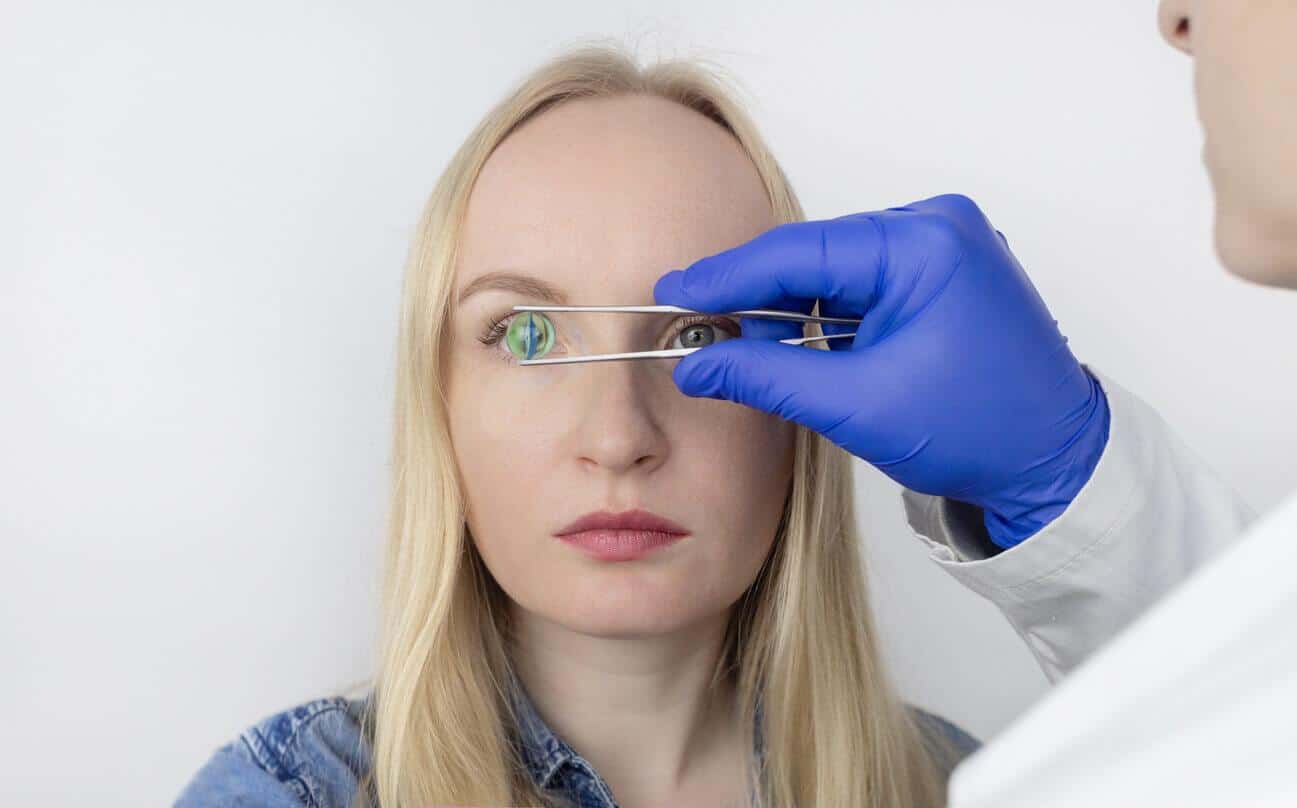
Lens replacement surgery – also called refractive lens exchange or clear lens extraction – is a form of refractive surgery that replaces the eye’s natural lens with an artificial lens.
This procedure is identical to cataract surgery, but performed before a cloudy lens develops. Instead of waiting until vision deteriorates further, the lens is proactively replaced to improve clarity and prevent future cataracts.
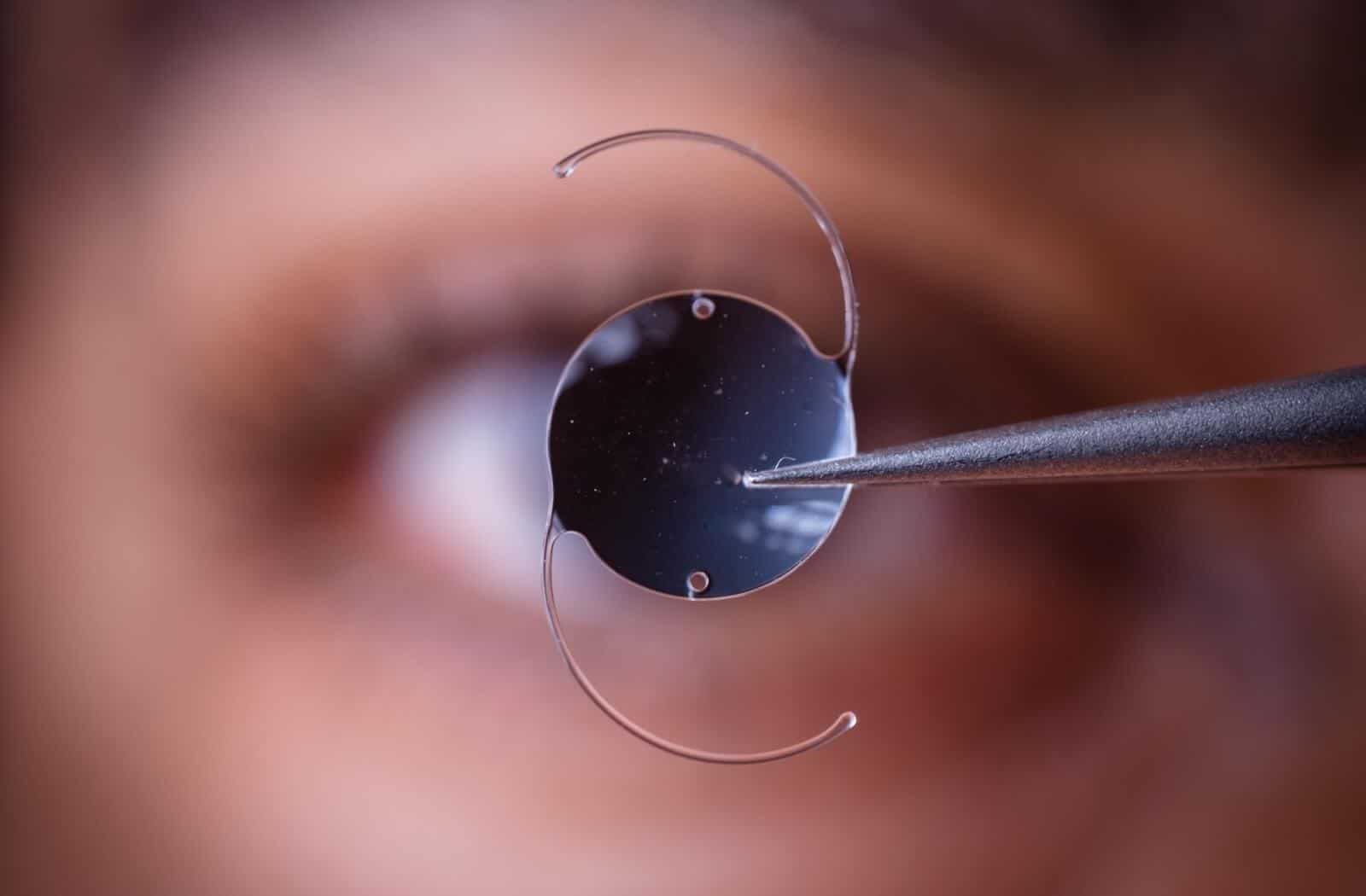
The new intraocular lens (IOL) is selected based on your vision goals and may include:
- Multifocal IOLs for distance and near vision
- Extended depth of focus (EDOF) lenses for smoother vision transitions
- Toric lenses to correct astigmatism
Unlike laser vision correction, which reshapes the cornea, refractive lens exchange surgery addresses the root cause of age-related vision changes.
How refractive lens exchange works
During RLE refractive lens exchange, the eye’s natural lens is carefully removed and replaced with a premium artificial intraocular lens.
This new lens:
- Restores how light rays focus on the retina
- Corrects refractive errors
- Improves both distance and near vision
Because the natural lens is removed, patients will never develop cataracts in the future.
This makes RLE surgery both a vision correction procedure and a preventative solution.

Is RLE eye surgery right for you?
RLE eye surgery is most commonly recommended for patients aged 45–65 experiencing age-related farsightedness or increasing dependence on corrective lenses.
You may be a good candidate if you:
- Are frustrated with reading glasses or progressive lenses
- Have noticeable vision changes affecting daily life
- Want a long-term or permanent solution
- Have been told you’re not suitable for laser eye surgery
Unlike LASIK, refractive lens exchange does not rely on corneal thickness, making it suitable for a broader range of patients – including those with thin corneas.
Dr Geoffrey Ryan will assess your eye health, vision goals, and suitability during a comprehensive consultation.
What conditions can lens replacement surgery treat?
Refractive lens exchange can correct multiple refractive errors at once, including:
- Short sightedness
- Long sightedness
- Astigmatism
- Age-related farsightedness (presbyopia)
Because the procedure replaces the natural lens, it can improve vision across multiple distances – including near vision and intermediate vision.

The RLE procedure – what actually happens
The RLE procedure is a highly precise surgical procedure performed using advanced technology.
During treatment:
- Numbing eye drops are applied
- A small incision is made in the eye
- The natural lens is removed
- A customised intraocular lens IOL is inserted
The procedure is typically performed at South Brisbane Day Hospital and usually takes around 20–30 minutes per eye.
Both eyes are often treated separately, depending on your treatment plan.
What does lens replacement surgery feel like?
Most patients experience minimal discomfort during RLE eye surgery.
You may notice:
- Mild pressure during the procedure
- Temporary blurred vision afterwards
- Slight sensitivity to light
The procedure is generally well tolerated, and discomfort is managed with medication and eye drops.

Recovery after RLE surgery
Recovery from lens replacement surgery is typically smooth and predictable.
In the first few days:
- Vision may be slightly blurred
- Light sensitivity is common
- Eye drops support healing
Over the following weeks:
- Vision improves and stabilises
- Focus becomes clearer across distances
- Most patients resume normal activities quickly
The lens replacement surgery recovery time varies slightly between patients, but most people notice steady improvement during the healing process.
Results – what can you expect?
One of the key benefits of refractive lens exchange is its long-term impact.
Most patients achieve:
- Clear vision across multiple distances
- Reduced reliance on glasses or contact lenses
- Greater visual independence
Premium intraocular lenses can provide a high level of clarity, helping patients maintain an active lifestyle without constant reliance on vision glasses or corrective lenses.
Because the natural lens is replaced, this is considered a permanent solution.

Dr Ryan will discuss all risks in detail and ensure you have realistic expectations before proceeding.

Risks and considerations
All eye surgery carries some level of risk, although complications are uncommon.
Potential risks include:
- Infection
- Inflammation
- Retinal detachment
- Posterior capsular rupture (rare)
Your surgeon will assess all risk factors and discuss them in detail before proceeding.
Maintaining realistic expectations is important, as outcomes vary depending on individual eye health and lens selection.
RLE vs other eye surgery options
Understanding how refractive lens exchange compares to other procedures can help guide your decision.
RLE vs LASIK
- LASIK reshapes the cornea
- RLE replaces the natural lens
- RLE addresses age-related vision changes
RLE vs PRK
- PRK treats the corneal surface
- RLE provides a more complete solution for older patients
RLE vs ICL
- ICL adds a lens without removing the natural lens
- RLE replaces the lens entirely
For many patients over 45, lens replacement surgery offers more comprehensive results than laser procedures alone.


Why choose Dr Geoffrey Ryan
Choosing an experienced eye surgeon is essential for achieving safe and effective outcomes.
Dr Geoffrey Ryan offers:
- Over 10 years of surgical experience
- A personalised, patient-focused approach
- Advanced diagnostic and surgical technology
- Access to premium intraocular lenses
Every treatment is tailored to your needs, ensuring the best possible outcome.
What happens at your RLE consultation?
Your consultation is designed to determine whether RLE surgery is right for you.
This includes:
- A comprehensive eye examination
- Assessment of your natural lens and vision changes
- Discussion of your lifestyle and expectations
You’ll receive a personalised plan outlining:
- Suitable lens options
- Expected outcomes
- Recovery process


Cost of lens replacement surgery Brisbane
The cost of lens replacement surgery varies depending on your eyes, lens choice, and treatment plan.
As a general guide, RLE surgery typically starts from around $6,000 per eye, however this is indicative only.
An exact price can only be provided after your consultation.
Frequently asked questions
It is a procedure where the natural lens is replaced with an artificial intraocular lens to improve vision.
Yes – it is a well-established procedure with a strong safety profile when performed by an experienced surgeon.
The procedure usually takes around 20–30 minutes per eye.
Medicare may cover part of the procedure if medically required, but elective surgery is usually not covered.
Yes – toric lenses can correct astigmatism.
Light activity can resume within days, but strenuous exercise should be avoided early on.
The lens is designed to be permanent, but adjustments may be possible in some cases.
Flying is usually safe after initial recovery, depending on your surgeon’s advice.
Take the next step towards long-term vision freedom
If you’re ready to move beyond glasses and explore a long-term solution, lens replacement surgery Brisbane patients trust may be the right option.
Dr Geoffrey Ryan will help determine whether refractive lens exchange is the best fit for your vision and lifestyle.
Or call us on (07) 3239 5000