
Refractive Eye Surgery in Brisbane
Correct and focus your vision with safe, effective refractive eye surgery in Brisbane.

Dr Geoffrey Ryan is a highly experienced eye surgeon with more than a decade of experience delivering patient-focused vision correction procedures. Using advanced diagnostic technology and a personalised approach, he assesses your vision needs and recommends the most suitable refractive surgery option for long-term results.
If you’re tired of relying on glasses or contact lenses, modern laser eye surgery Brisbane patients trust may help you achieve clearer, more stable vision.
Book your assessment to find out if you’re suitable for refractive eye surgery.
Book your assessment with a specialised optometrist to find out if you are suitable for refractive surgery.
What is refractive eye surgery?
Refractive eye surgery refers to a group of vision correction procedures designed to improve how light enters the eye and focuses on the retina. These procedures work by either reshaping the cornea or replacing the eye’s natural lens.
They are used for correcting refractive errors, including:
- Short sightedness
- Long sightedness
- Astigmatism
The goal is to reduce your reliance on glasses or contact lenses and improve both distance vision and near vision.
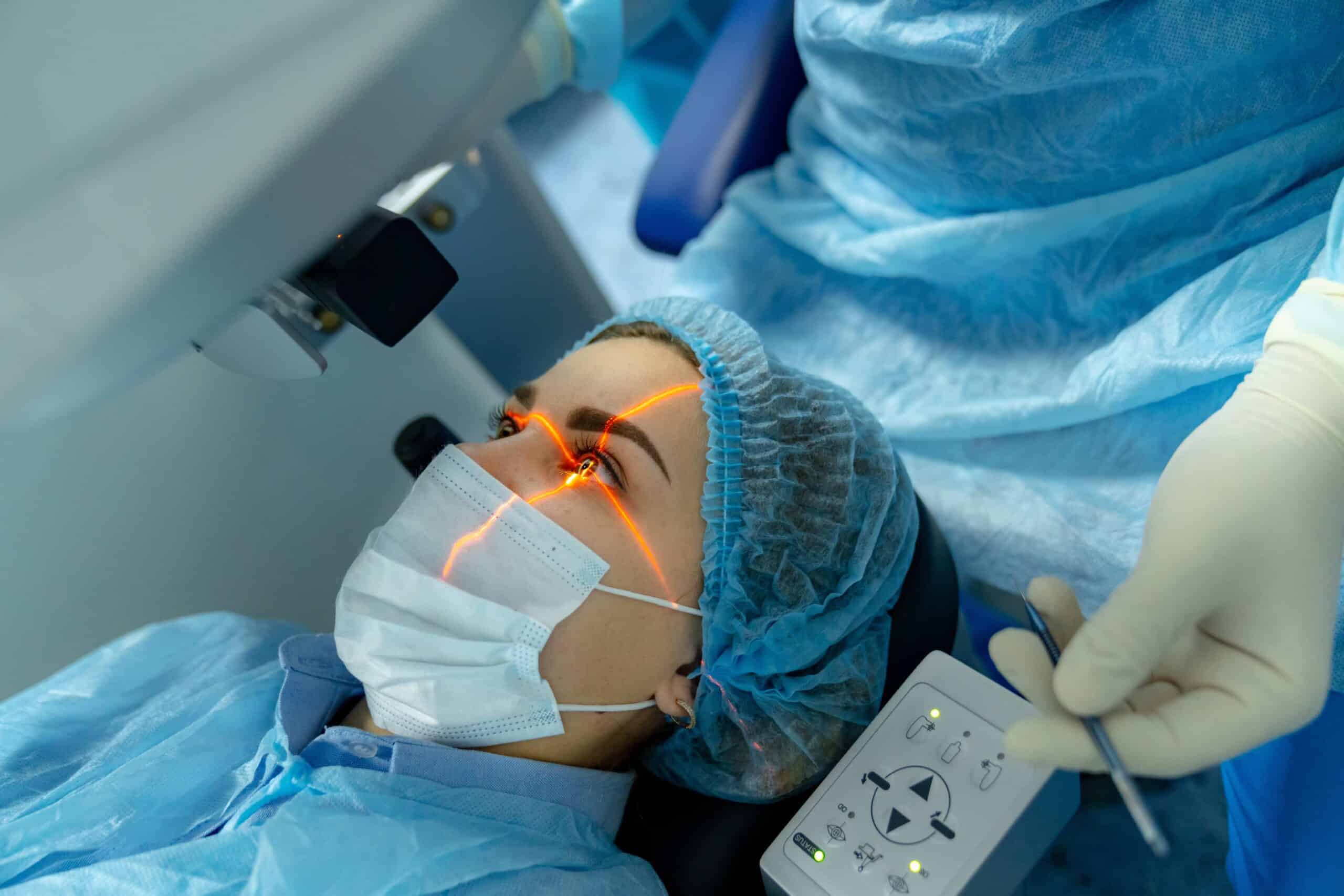

Understanding astigmatism and vision problems
Astigmatism is a common refractive error where the cornea has an irregular shape. Instead of focusing light evenly, the eye produces blurred vision at multiple distances.
You may notice:
- Difficulty focusing on distant objects
- Strain when reading or using screens
- Fluctuating or blurry vision
Modern refractive surgery techniques can effectively correct astigmatism, improving clarity and overall visual quality.

Can refractive surgery correct astigmatism?
Yes – many laser eye surgery procedures and refractive lens surgery options can correct astigmatism.
With laser vision correction, a precise laser beam reshapes the corneal tissue, allowing light to focus more accurately. In lens-based procedures, an artificial lens can be used to correct the underlying refractive error.
However, suitability depends on:
- Corneal thickness
- The degree of astigmatism
- Overall eye health
Dr Ryan will assess whether a laser for astigmatism or another approach is the most appropriate and safest option for you.
Types of refractive surgery
There are several vision correction options available. The best choice will vary depending on your eyes, lifestyle, and long-term goals.
Laser eye surgery
LASIK, PRK and KLeX (e.g SMILE or CLEAR)
Laser eye surgery is one of the most common forms of laser refractive surgery.
These laser eye surgery procedures use an advanced excimer laser to reshape the cornea, helping to correct vision and reduce reliance on glasses or contact lenses.
There are three main types:
- LASIK (laser assisted in situ keratomileusis) – a thin corneal flap is created using a femtosecond laser, allowing the deeper layers of the cornea to be reshaped. This typically offers a faster recovery time and minimal discomfort.
- PRK (photorefractive keratectomy) – PRK involves removing the surface layer of the cornea instead of creating a flap. This can be more suitable for patients with thinner corneas or those involved in contact sports.
- KLeX (Keratorefractive Lenticule Extraction) – KLeX, also known as CLEAR or SMILE, is a modern, minimally invasive laser eye procedure that corrects short-sightedness and astigmatism — without cutting a flap in the cornea. Using a precise femtosecond laser, a tiny lens-shaped disc of tissue (called a lenticule) is created within the cornea and removed through a small keyhole incision. The result is a reshaped cornea that focuses light correctly onto the retina, giving you clearer vision without glasses or contact lenses. Because there is no flap, KLeX is associated with a more stable corneal surface, making it a popular choice for people with active lifestyles or occupations where flap-related risks matter.
These procedures are safe and effective laser vision correction techniques that can treat short sightedness, long sightedness, and astigmatism surgery needs.
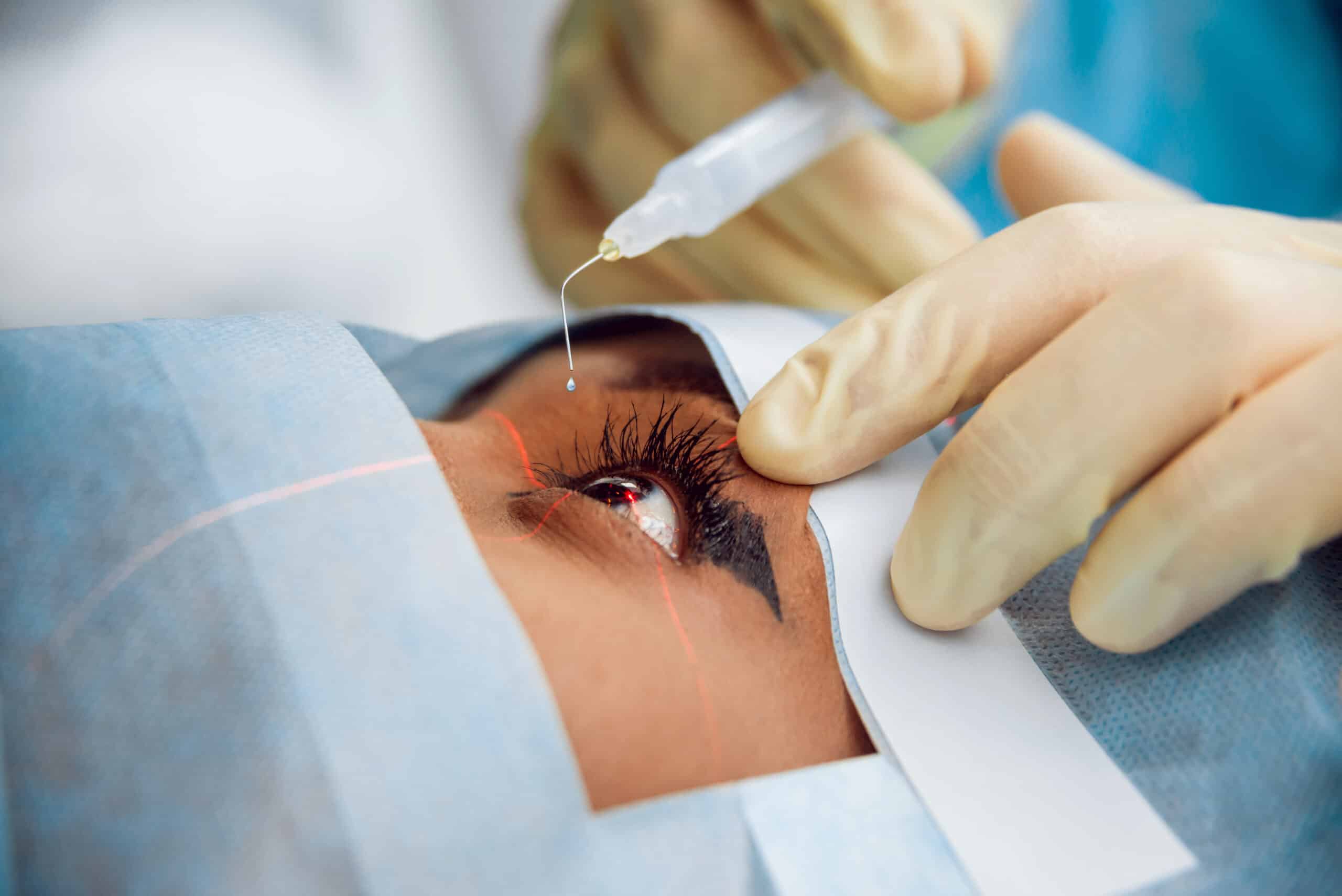

Implantable contact lenses
Implantable Collamer Lens (ICL)
An Implantable Collamer Lens is a form of refractive lens surgery where a custom artificial lens is placed inside the eye without removing the natural lens.
This option may be recommended if:
- You are not suitable for laser eye surgery
- You have a higher degree of refractive error
- You are seeking a reversible solution
Because it does not alter the cornea, ICL can be an excellent alternative for certain patients.
Refractive lens exchange (RLE)
Custom lens replacement
Refractive lens exchange, also known as lens exchange, replaces your natural lens with a custom-designed artificial lens.
This procedure is particularly suited for:
- Age-related vision changes
- Reduced near vision
- Patients wanting to minimise long-term reliance on glasses
It can correct:
- Short sightedness
- Long sightedness
- Astigmatism
- Presbyopia
This procedure is similar to cataract surgery, but performed before a cataract develops.

Who is suitable for refractive surgery?
Vision correction surgeries for cataracts
Not everyone is suitable for refractive eye surgery, and a detailed assessment is essential.
You may be a suitable candidate if you:
- Have a stable glasses prescription
- Have healthy corneal tissue
- Do not have active eye disease
- Are not affected by certain autoimmune conditions
Suitability also depends on your vision needs, lifestyle, and the type of refractive error present.
Dr Ryan takes a careful, patient-first approach and will only recommend eye surgery when it is safe and appropriate.
The refractive surgery process
Your journey is designed to be straightforward and supportive.
1. Assessment
A comprehensive evaluation of your vision problems, cornea, and overall eye health.
2. Consultation
You’ll meet with your surgeon to discuss your goals and explore suitable vision correction options.
3. Procedure
Your procedure is performed using advanced laser or lens technology.
4. Follow Up Care
After surgery, you’ll attend a follow up appointment to monitor your healing process. You may be prescribed eye drops to support recovery and comfort.

Recovery and results
Recovery varies depending on the procedure:
- LASIK – often rapid recovery, with improved vision within days
- KLeX (SMILE or CLEAR) – Most patients are back to their normal routine within a day or two, with vision continuing to improve over the following weeks.
- PRK – slightly longer healing time as the surface layer recovers
- Lens procedures – gradual improvement as the eye adapts
It is normal to experience temporary blurry vision, sensitivity, or dryness during recovery.
Most patients achieve clearer vision and a reduced need to wear glasses or contact lenses.
Risks and considerations
All eye surgery carries some level of risk, although serious complications are uncommon.
Potential risks may include:
- Dry eyes
- Infection
- Under correction or overcorrection
- Visual disturbances such as glare or halos
Dr Ryan will explain all risks in detail and ensure you have realistic expectations before proceeding.

Refractive surgery pricing
The cost of refractive eye surgery varies depending on the procedure:
PRK (Laser eye surgery)
from $3,000 per eye
LASIK (laser eye surgery)
from $3,500 per eye
KLeX
from $4000 per eye
Implantable Collamer Lens (ICL)
from $6,000 per eye
Refractive lens exchange
from $6,000 per eye
Cataract surgery may be partially covered by private health insurance, depending on your circumstances.
A personalised quote will be provided following your assessment.
Book your assessment with a specialised optometrist to find out if you are suitable for refractive surgery.

Why choose Dr Geoffrey Ryan?
Choosing an experienced eye surgeon is essential when considering refractive surgery.
Dr Geoffrey Ryan offers:
- Over 10 years of surgical experience
- A personalised, patient-focused approach
- Advanced technology and precise diagnostics
- A strong focus on safety and long-term outcomes
You’ll receive honest advice, clear guidance, and ongoing support throughout your vision correction journey.
Book your refractive surgery assessment
If you’re considering laser eye surgery Brisbane patients trust or exploring options for astigmatism surgery, the first step is a comprehensive assessment.
Book your consultation today to find the most suitable refractive eye surgery option for your vision.`
Frequently asked questions
Yes – many forms of refractive surgery, including laser eye surgery and refractive lens exchange, can effectively correct astigmatism. The best option depends on the shape of your cornea, the severity of your condition, and your overall eye health. A personalised assessment is essential to determine the safest and most effective treatment.
Suitability for laser eye surgery depends on several factors, including your glasses prescription, corneal thickness, and general eye health. Your prescription should be stable, and you should not have active eye disease or certain medical conditions. Dr Ryan will perform a detailed assessment to determine if laser vision correction is appropriate for you.
Both LASIK (laser assisted in situ keratomileusis) and PRK (photorefractive keratectomy) are forms of laser refractive surgery, but they differ in how the cornea is treated. LASIK involves creating a corneal flap, allowing for faster recovery, while PRK removes the surface layer, making it more suitable for thinner corneas. The right option depends on your eye structure and lifestyle. You can read our LASIK vs PRK blog to learn more.
Recovery time varies depending on the procedure. LASIK typically offers a faster recovery, with many patients returning to normal activities within a few days. PRK may involve a slightly longer healing process. During recovery, it is normal to experience temporary blurry vision, and eye drops are used to support healing.
Refractive eye surgery provides long-lasting results, but your vision can still change over time due to ageing or other factors. While many patients significantly reduce their reliance on glasses or contact lenses, some may still need minor correction later in life, particularly for near vision.
Like all eye surgery, laser eye surgery carries some risks, although serious complications are rare. Potential risks include dry eyes, infection, and visual disturbances such as glare. Careful screening, precise surgical technique, and proper follow-up care help minimise these risks.