
PRK & TransPRK Laser Eye Surgery in Brisbane
PRK Eye Surgery Brisbane
A long-term vision correction option, carefully tailored to each patient using advanced technology and detailed assessment.
What is PRK eye surgery?
If you've been told you're not suitable for LASIK eye surgery, it doesn't mean you're out of options. At Dr Geoffrey Ryan's Brisbane practice, PRK is carefully tailored to each patient using advanced technology and detailed assessment.
Unlike LASIK, this vision correction procedure does not involve creating a corneal flap. Instead, the outermost layer of the cornea – known as the corneal epithelium – is gently removed, allowing an excimer laser to reshape the underlying corneal tissue.
This approach is designed to be appropriate for your eyes and aimed at long-term visual outcomes, with your individual risks and suitability discussed at consultation.
This makes PRK particularly suitable for patients with:
It is one of the most established forms of laser vision correction surgery, used for several decades.
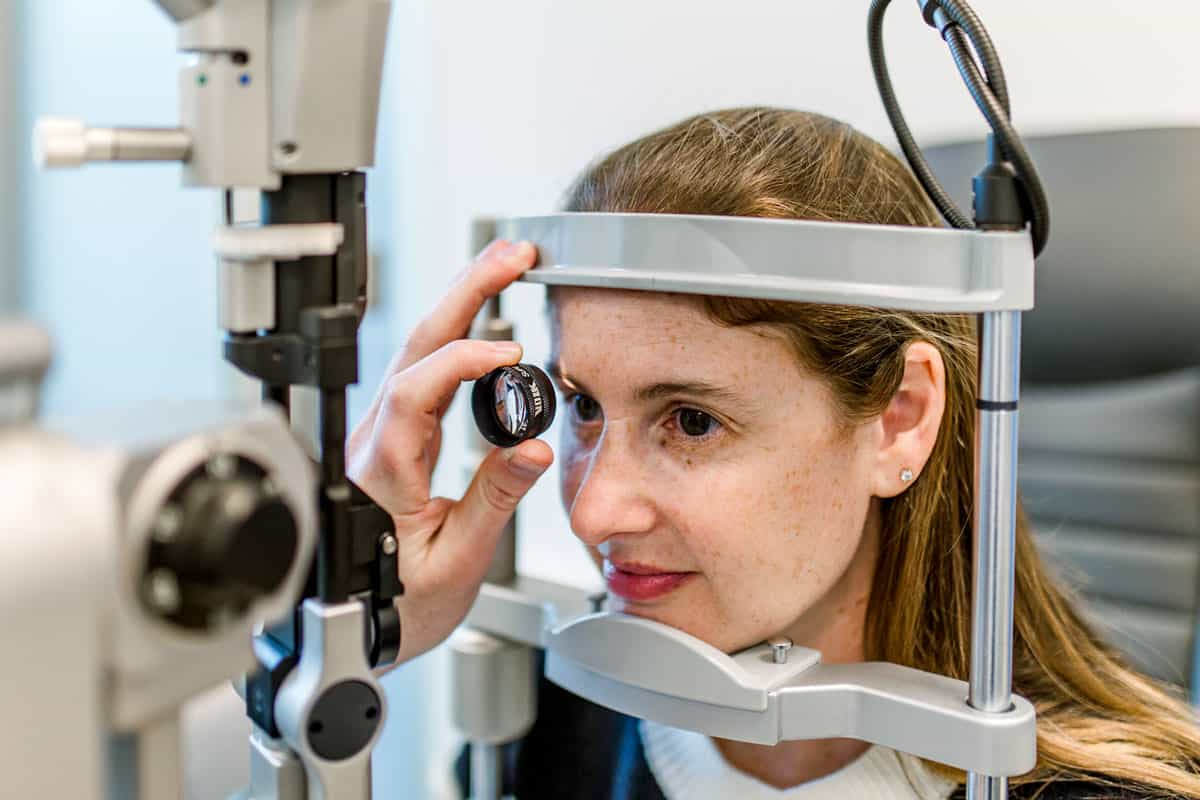
Personalised care from consult to recovery
Considering laser eye surgery?
Not sure whether PRK, TransPRK, LASIK or another vision correction procedure is right for you? A comprehensive assessment with Dr Geoffrey Ryan can help determine the most appropriate option for your eyes.
How PRK surgery works
During photorefractive keratectomy, the goal is to improve how light rays focus on the retina.
The procedure works by:
Remove the outer layer
The outer layer of the corneal surface is
removed, exposing the tissue beneath.
Precise laser ablation
An excimer laser performs precise laserablation of the corneal tissue.
Reshape the cornea
The corneal tissue is reshaped to correct refractive errors, so light focuses accurately.
Unlike LASIK, no femtosecond laser is used to create a flap — which means the corneal structural integrity is preserved.
Is PRK surgery right for you?
Not every patient is suited to LASIK – and that’s where PRK eye surgery becomes an important alternative.
You may be a suitable candidate for PRK if you
PRK is often recommended when preserving corneal structure is an important consideration. Dr Geoffrey Ryan will assess your corneal thickness, refractive errors, and overall eye health to determine the most appropriate treatment.

What conditions can PRK eye surgery treat?
If you've been told you're not suitable for LASIK eye surgery, it doesn't mean you're out of options. At Dr Geoffrey Ryan's Brisbane practice, PRK is carefully tailored to each patient using advanced technology and detailed assessment.
Short sightedness
Myopia — distant objects appear blurry while near vision stays clear.
Long sightedness
Hyperopia — difficulty focusing on near objects, sometimes at all distances.
Astigmatism
An irregularly shaped cornea causing distorted or blurred vision at any distance.
These conditions affect how light focuses inside the eye, often causing blurry vision or difficulty focusing on near or distant objects. PRK works to correct refractive errors by reshaping the cornea, improving overall visual clarity.

TransPRK – a no-touch laser eye surgery option
Dr Geoffrey Ryan performs TransPRK, an advanced form of surface laser eye surgery that uses the laser to remove the corneal epithelium and reshape the cornea in a single continuous treatment.
Unlike conventional PRK, no alcohol solution, brush or surgical instrument touches the eye during the procedure.
Benefits of TransPRK may include:
The PRK procedure – what actually happens
The PRK procedure is performed as a precise, controlled surgical procedure using advanced laser technology.
The entire procedure is relatively quick, and most patients experience minimal discomfort during treatment.
During treatment:

What does PRK surgery feel like?
During the procedure, PRK surgery is typically pain-free due tonumbing drops. After surgery, you may experience:
This is part of the normal healing process as the outer layer of thecornea regenerates.
What conditions can PRK eye surgery treat?
PRK recovery typically takes longer than LASIK, but the long-term visual outcomes are comparable. The difference lies in the healing process, not the final result.
Because PRK does not involve creating a corneal flap, the surface layer of the eye naturally regenerates after treatment. While this means recovery is more gradual, many patients choose PRK specifically because it may be the safer option for their eye anatomy or lifestyle.
During the first few days
During the following weeks
Results — what can you expect?
PRK outcomes are generally similar to LASIK in the long term for appropriately selected patients, though recovery takes longer and individual results vary.
Most patients report:
Most patients achieve functional vision within the first week, with ongoing improvement over the following weeks. Full visual stabilisation may take several weeks to a few months, depending on the individual.
Why the Alcon WaveLight EX500 matters
Not all excimer lasers are the same. Dr Geoffrey Ryan performs PRK and TransPRK using the Alcon WaveLight EX500, an advanced excimer laser platform available for laser vision correction.
500 Hz
Faster treatment
1,050 Hz
Advanced eye tracking
3 profiles
Personalised treatment
Why this matters for PRK
Because PRK reshapes the surface of the cornea directly, laser precision is particularly important. Advanced laser technology may contribute to smoother treatments and predictable healing, with your expected visual outcomes discussed individually based on your eyes.
Questions to ask when comparing PRK providers

Risks and considerations
All eye surgery carries some level of risk, although complications are uncommon. PRK may involve a longer healing process compared to LASIK, but it does not carry risks specifically associated with a corneal flap, since none is created.
Dr Geoffrey Ryan will explain all risks clearly to help you make an informed decision. Potential risks include:
Every eye is different
Find out if PRK is right for you
A detailed consultation with Dr Geoffrey Ryan can determine whether PRK, TransPRK, LASIK or another vision correction procedure is the best option for your needs. An exact cost can only be provided after your consultation, once your eye health and vision needs have been fully assessed.
Book Refractive AssessmentCost of PRK eye surgery
per eye · indicative only
The cost of PRK varies depending on your individual eyes and treatment plan.
PRK vs other laser eye surgery options
Several laser vision correction procedures can produce excellent results. The best option depends on your corneal anatomy, prescription, lifestyle and visual goals.
Dr Geoffrey Ryan offers a comprehensive assessment to determine which procedure is most appropriate for your eyes.
Note: ratings above (e.g. dry eye risk, contact sport suitability, long-term outcomes) reflect general clinical guidance, not guaranteed individual results — actual suitability and outcomes will be assessed at your consultation.
Several rows rate PRK favourably relative to LASIK and SMILE; these reflect Dr Ryan's general clinical experience rather than published trial data specific to this practice.
Find out if PRK is right for you
Every eye is different. A detailed consultation with Dr Geoffrey Ryan can determine whether PRK, TransPRK, LASIK or another vision correction procedure is the best option for your needs.
Why choose Dr Geoffrey Ryan
Choosing an experienced laser eye surgeon is essential for achieving safe outcomes. Every treatment is tailored to your eyes, with safety and long-term outcomes central to the treatment plan.
Dr Geoffrey Ryan offers:

What happens at your PRK consultation?
Your consultation is designed to determine whether PRK eye surgery is right for you. This includes:
01
Corneal mapping and
measurements
02
Assessment of refractive
errors
03
Evaluation of eye health
04
Discussion of your lifestyle and vision goals
These conditions affect how light focuses inside the eye, often causing blurry vision or difficulty focusing on near or distant objects. PRK works to correct refractive errors by reshaping the cornea, improving overall visual clarity.
Frequently asked questions
Can't find the answer you're looking for? Give us a call, we're happy to help.
Take the next step towards clearer vision
If you’re considering PRK eye surgery in Brisbane, the first step is a comprehensive assessment. Dr Geoffrey Ryan will determine whether PRK laser eye surgery or another treatment is the right option for your vision.